 Roman Poliashenko
The time for AI has come
At Aceverse we’re convinced the era of artificial intelligence is already here. And every company that wants to lead its niche rather than chase the market should adopt AI-first solutions in its business.
At the same time, let’s defuse the main fear right away. No AI today can replace real people. Properly configured AI doesn’t fire your employees — it dramatically amplifies each of them, taking over the routine and leaving people what people do best.
The only question is what exactly counts as an AI-first solution. Because there’s a lot of confusion on the market right now.
“AI solutions” that aren’t actually AI-first
Open any roundup of “AI tools for business” and you’ll see dozens of products positioning themselves as AI solutions. A CRM with a built-in chatbot. AI-calling services. ERP systems with AI analytics.
These are all useful things. But they aren’t truly AI-first business solutions. They’re separate AI features that vendors bolted onto their existing products. Here AI is an add-on over the old logic, an extra button on the side. That’s “just AI,” not AI-first.
The difference isn’t cosmetic. It’s architectural — it’s about where intelligence actually “lives” in your system.
What AI-first really is: agentic systems
At Aceverse we believe 2026 is the breakout moment for agentic systems. And it’s agentic systems — not chatbots on the side — that are the real core of the AI-first approach.
The term has many definitions. We define it this way: an agentic system is software code augmented with artificial intelligence and granted access to information.
Imagine an employee who never sleeps, instantly reads any volume of data, knows all your tools, and can act inside them on their own — but always under human control.
It’s not a chat window that answers questions. It’s a doer that has access to data and tools and carries a task through to a result.
Architecture: foundation first, apps second
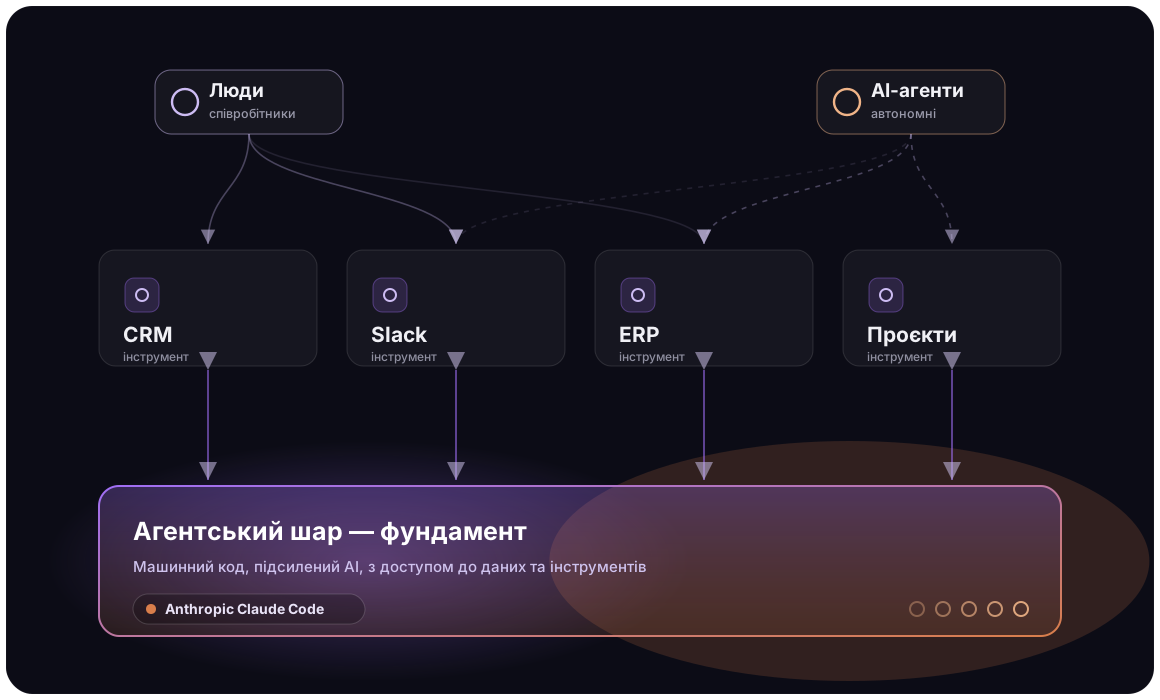
From this follows the key principle. To build a full-fledged AI solution for a business, you first have to build exactly this — the agentic — layer. It’s the foundation.
CRM, ERP and other apps are a higher layer. In an AI-first architecture they turn into tools used equally by your employees and your AI agents. Not “a program for people with a bot screwed on,” but shared tooling for people and agents alike.
That’s why at Aceverse we build our solutions on Anthropic Claude Code — a technology that lets us create a reliable agentic layer rather than a cosmetic AI add-on.
How it works in a real business
So what specific function does such an agent perform? It sits in the middle — between the company’s data, its people, and the tools the company uses every day.
Anyone on the team can invoke it. For example, the agent can be added to Slack and integrated with different departments. It has shared memory structured by access levels: different employees and different tools see exactly what they’re supposed to. And access to CRM, ERP and project-management systems closes the full loop of interaction between the AI and the team.
This is best seen in a concrete scenario.
Scenario: a lead’s journey from form to deal
Capture and enrichment. The company website has a form where a lead comes in and submits a request. The lead immediately reaches the AI agent, which instantly starts so-called data enrichment: it finds deeper information about the person and their company — website, LinkedIn page, list of employees. The agent checks whether there are mutual contacts with your team, analyzes what the company does, what its pains and goals are, and which projects it has been part of before.
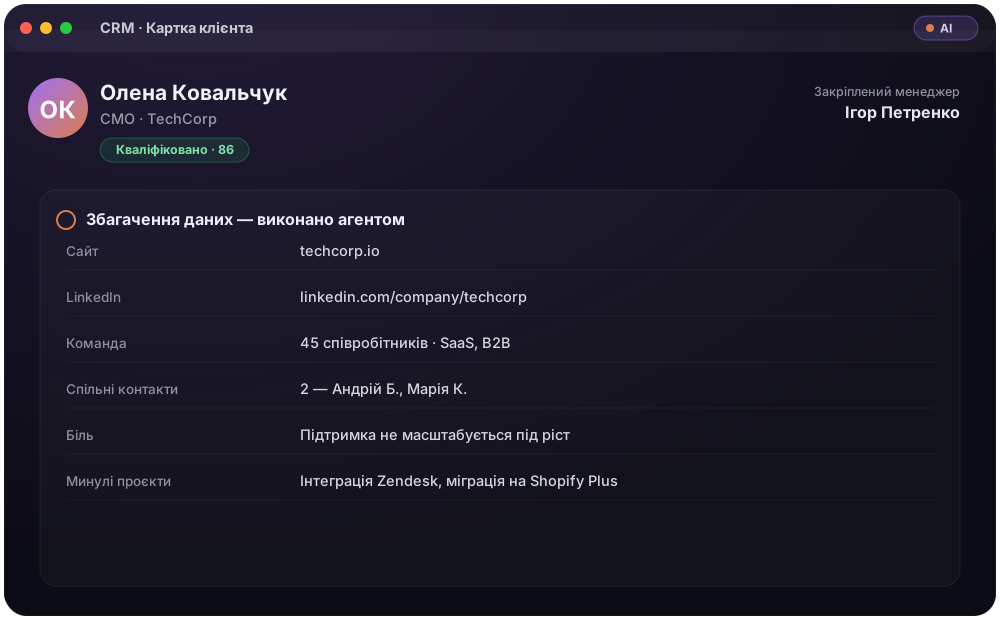
Qualification and routing. Based on this, the agent qualifies the lead and links it to a specific manager — the one who, by certain categories, best fits this particular client.
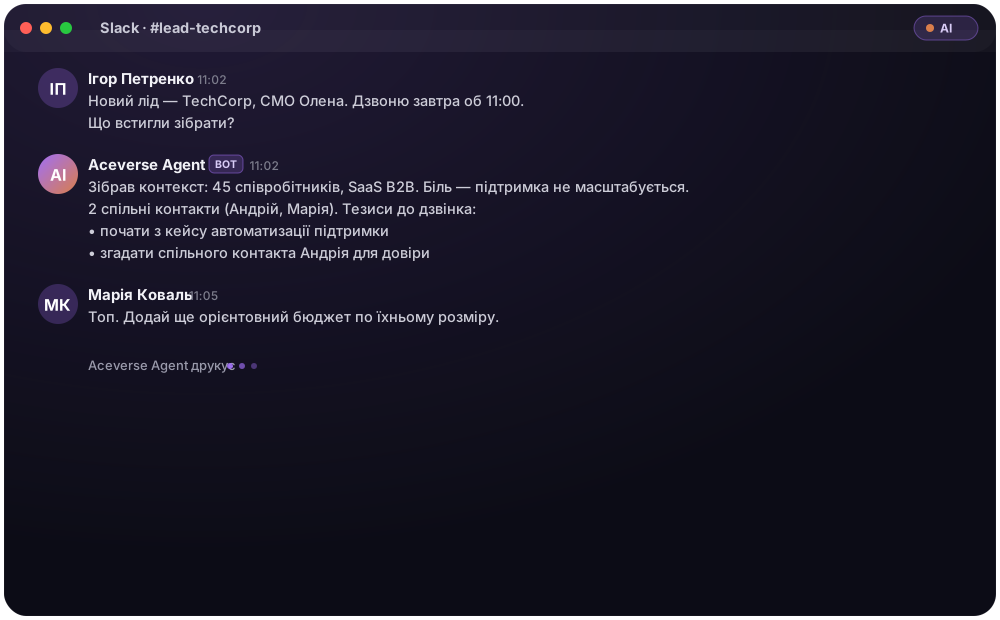
Team prep. As soon as the data lands in the CRM and a customer card is created, the team can work on it in parallel — for example, in Slack. A working group is created with the right people, and the same agent is added to it. It helps answer questions, run brainstorming, and prepare the manager for the phone call with the client.
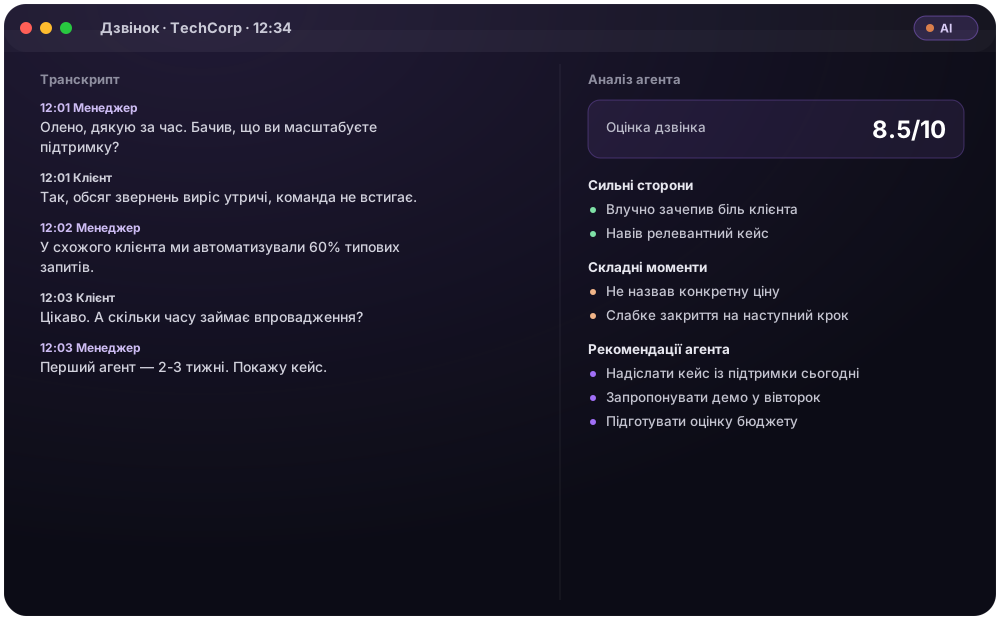
Call and analysis. The prepared manager calls the lead and runs the first call. The conversation is fully transcribed, added to the customer card, and analyzed by the agent. The agent assesses not only the content but also how well the manager performed and what tricky moments came up — and produces a report for that employee’s lead. After the call, the agent gives recommendations on next steps and helps plan them.
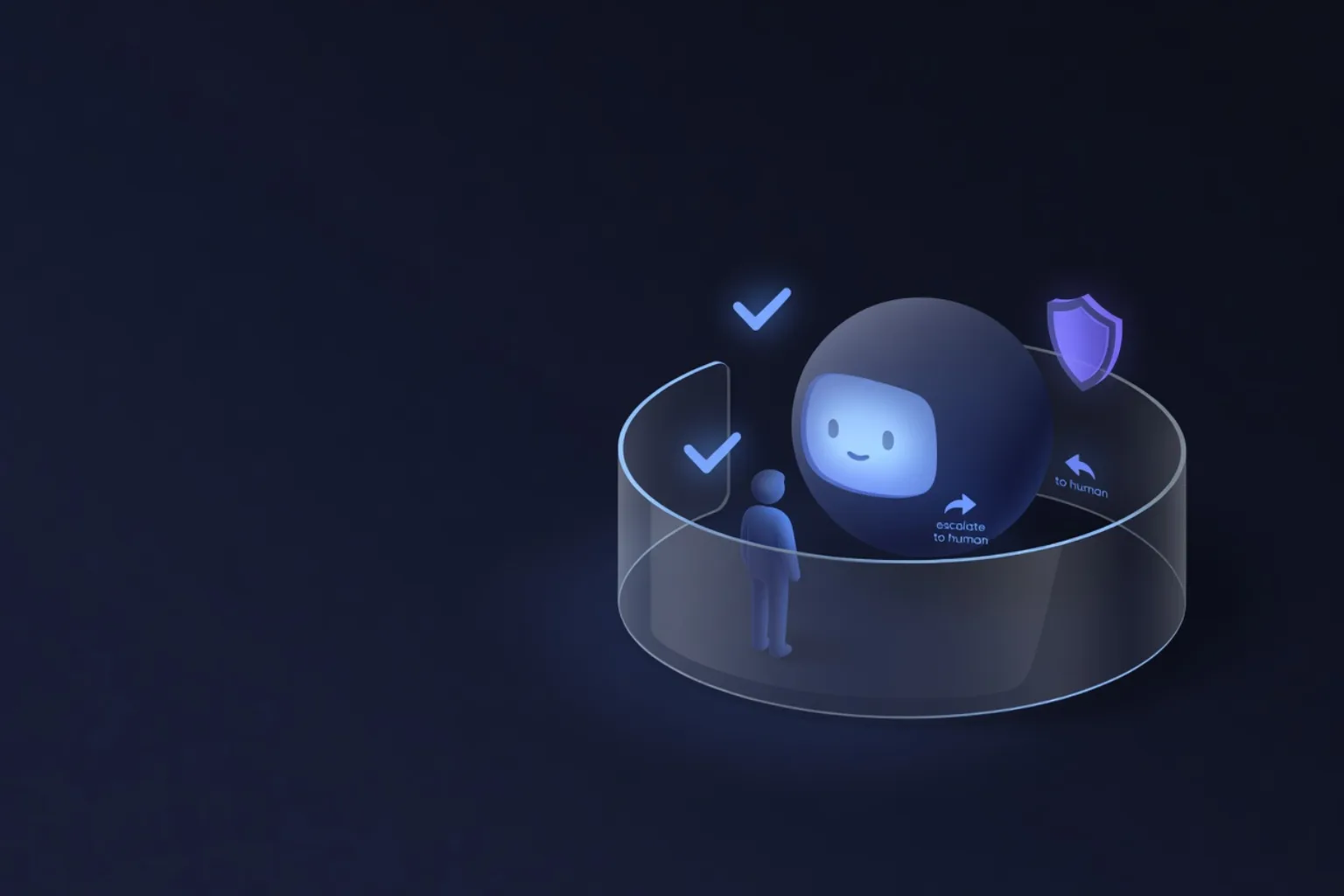
Note: at every stage the human makes the decision. The agent prepares, gathers, analyzes and suggests — but the manager makes the call, leads the conversation, and closes the deal.
It’s not only about sales
We walked through a sales scenario because it’s vivid. But the same logic works everywhere there’s data, people and tools: in customer support, operations, hiring, internal analytics. Anywhere an employee spends hours on routine, the agentic layer can take that routine off their hands.
In summary
An AI-first solution isn’t a chatbot bolted onto an old product. It’s a new architecture in which the agentic layer becomes the foundation and the familiar apps turn into shared tools for people and AI. And most importantly — the human stays at the center, amplified by this approach, not replaced by it.
Aceverse builds exactly these custom AI-first solutions for businesses — from the agentic layer to the tools your team uses every day.