 Roman Poliashenko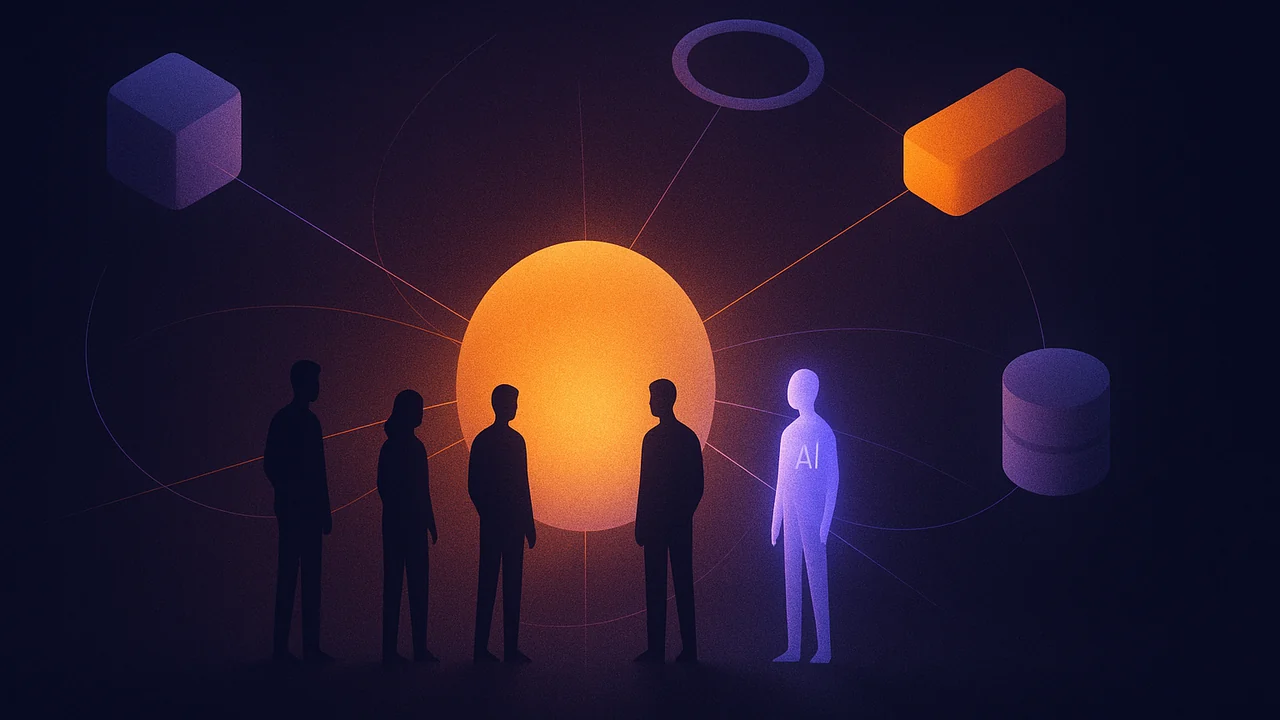
Dozens of interfaces — all different
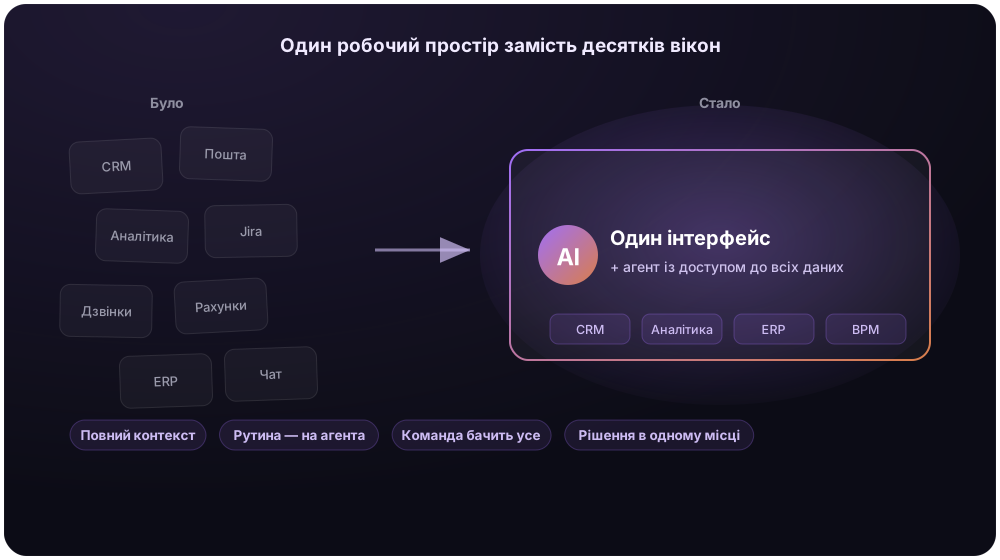
The classic way teams work is built on the fact that, throughout the day, every person juggles a multitude of different interfaces. Client chats, phone calls, Google Analytics, email, creating invoices, writing tech specs for the internal team, setting deadlines on a kanban board or in Jira, managing a client in the CRM.
You can list dozens of such tasks — and every one of them has its own interface. That is exactly what makes a manager's work complex and inefficient.
What if we unified it all
What if we unified all of this into a single interface — and gave access to all the information not to a person one tab at a time, but to an agent? At Aceverse we use the Claude app as the core component for the interface and the working experience.
This approach lets you stay in one interface throughout the day and interact with an agent that has access to all of the company's information — from end-to-end analytics and the CRM to BPM and ERP.
What the agent inside the company can do
The agent inside the company can handle any routine. For example:
- find clients in the CRM by certain parameters and send them automated messages;
- create a new stage in the sales funnel;
- analyze prior conversations between managers and clients;
- assign tasks to a specific team with a clear deadline;
- produce internal team analytics across projects.
And you could go on listing such tasks endlessly.
This does not mean you have to abandon classic interfaces, apps and tools. Some tasks are faster and more efficient to solve the classic way, without involving an agent. But the trajectory is inevitably shifting toward agentic systems.
A real case: a focus group in one channel
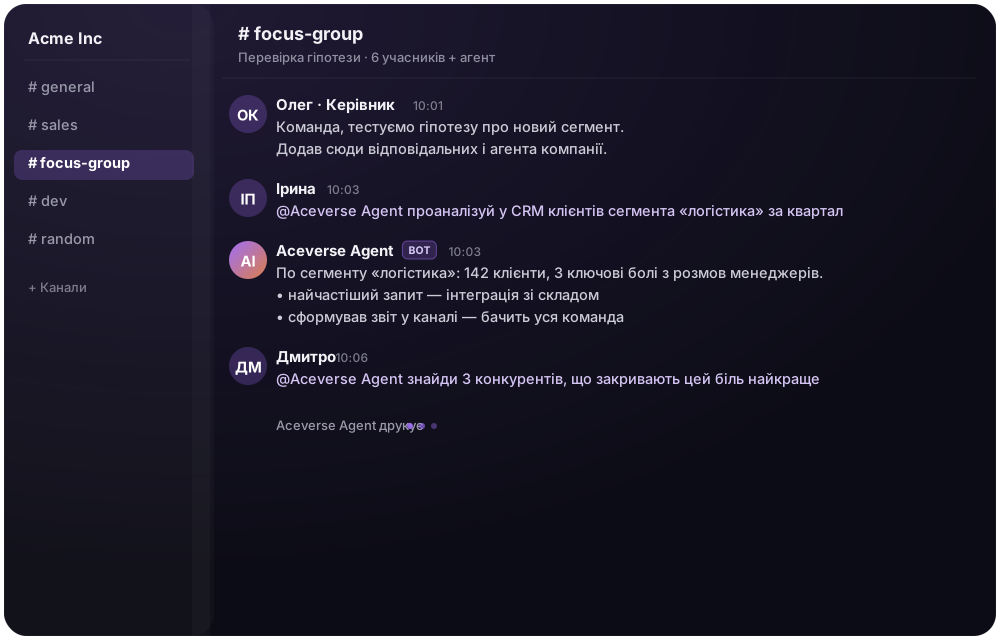
What does the advantage of this approach look like in practice? Imagine: as a leader, you create a focus group to test a hypothesis. To do that, you open a separate room in Slack and add the responsible people — and the company's agent.
In this channel, to test the hypothesis, each employee turns to the agent with a specific request: prepare a resource, use it to analyze the CRM database, check your company's warehouse stock, or find competitors who do this best — and then return analytics on the process that the whole team can see. From there you can already draw conclusions. And all of it stays in one interface, available to the entire team.
You can also connect tools available only to your company and built specifically for the tasks your team faces.
What infrastructure you need
What infrastructure does it take for all of this to work correctly and efficiently?
First of all, every app should have an MCP server. A CRM with an MCP server, for example, gives the agent solid interaction. Analytics likewise needs an MCP server for direct agent access. A database the agent can read the right information from — and, where needed, edit with the appropriate permissions.
The same applies to the custom skills and scripts that are shaped and built for a specific client by our team. At Aceverse we deliver these solutions on the Anthropic Claude platform — integrating both API-based solutions and Claude integrations that use a subscription (Claude Code, Max).
In summary
The idea is simple: one workspace becomes the center of the company, and an agent with access to all the data becomes the shared assistant for the whole team. The classic interfaces don't go anywhere, but more and more routine and context moves into one place where the whole team can see it.
The shift toward agentic systems has already begun — the only question is how early you make it part of your team's everyday work.